Melissa Di Pinto
EDLI 636 Spring 2016
QRI 5 Assignment
April 2016
Student Profile
Diego is a first grade student at PS 321 William Penn School in Brooklyn, New York. PS 321 is a large public elementary school with approximately 1,400 students.
When the QRI 5 was administered Diego was 6 years 6 months and in the 7th month of first grade. Diego moved to Brooklyn from California in the summer of 2015. He attended what was called a “transitional kindergarten” in a school district in rural California. When Diego entered first grade at PS 321 it was recommended that he enter a Kindergarten classroom based on his age, prior school experience, and academic performance. Diego’s parents felt strongly that he be in first grade so he could be challenged.
According to Diego’s teacher he has required small group instruction and literacy intervention this year to access the curriculum successfully and make gains. He receives pull out small group literacy intervention three days a week in a group of 4 and some push in math intervention one day a week in a group of 3. According to his teacher, Diego is currently reading independently at a level E and being guided at a level F. She says it is challenging for him to accurately identify new words that are supported in the picture, and is strong with reading words in isolation. She says he does not use context and meaning to help identify new words, getting stuck at the word level on graphophonics only.
QRI 5 Administration
Word Lists (word identification out of context)
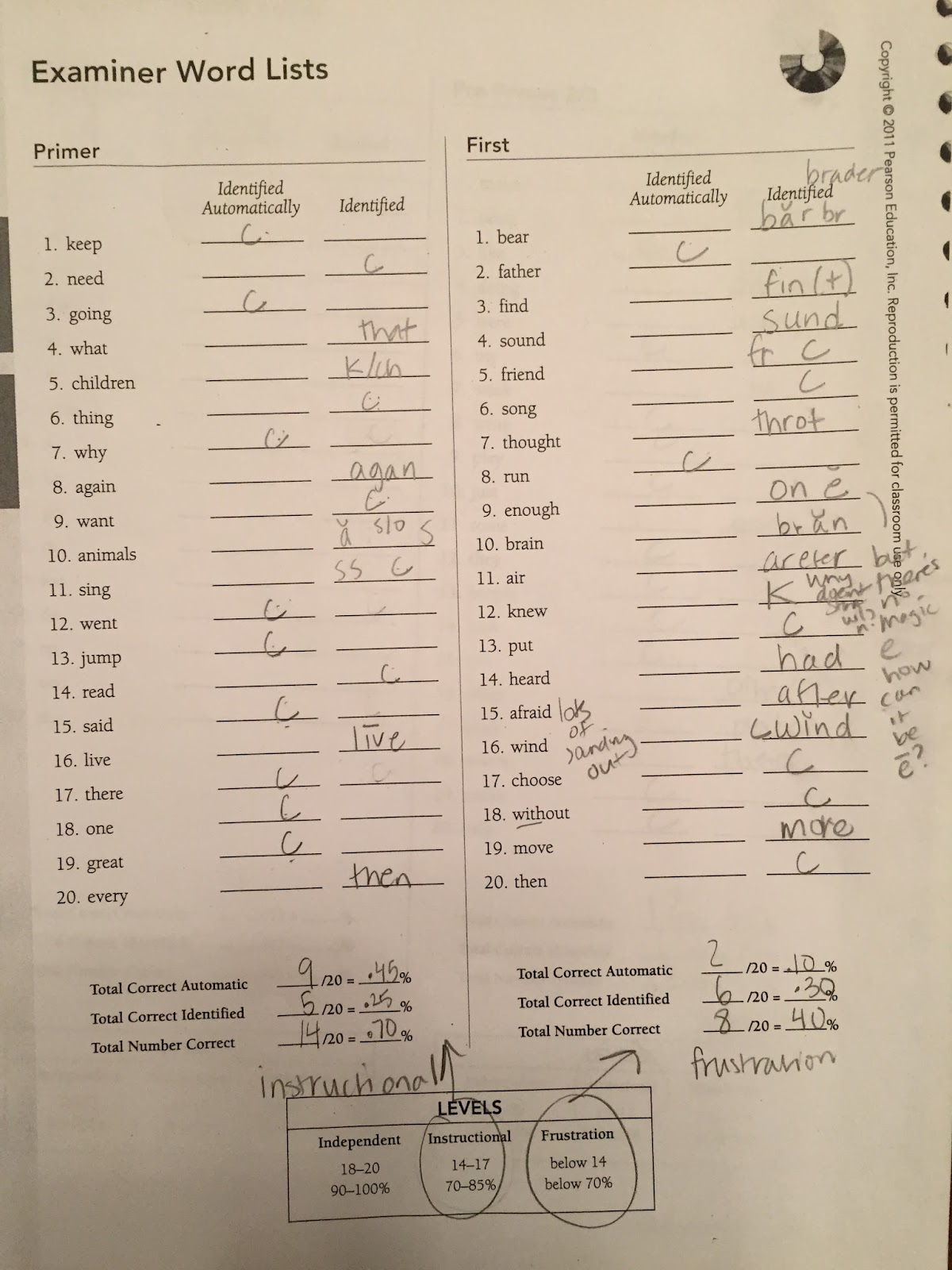
I started with the first level word list to see where Diego fell for his current grade level. In hindsight this was an error on my part because it was too difficult for him, and not the way I would want to start an assessment. Had I known the student (he is not mine) and the assessment tool better, I would have started at the Primer level. As you can see in the recording below, he scored at the frustration level on the first level word list. He identified two words automatically, and many were identified using letter sound knowledge to help him. Based on the results, I administered the Primer
level word list next. Diego was much more successful reading this list and he scored in the instructional range. He identified 9 words automatically and 5 quickly. Seeing as he was in the low range of instructional for this list, I went ahead and administered the Pre-Primer 2-3 word list. Surprisingly he still fell in the instructional range, but automatically identified more words and generally had an easier time than on the Primer list. I felt confident that I now had enough information to choose a starting passage.
Passage Reading (word identification in context, reading fluency, reading comprehension)
I went ahead and started with the Pre-Primer narrative passage “Lost and Found”. I chose this passage not realizing that it didn’t have pictures. In hindsight I would have chosen a passage with pictures so I could assess how Diego utilizes this source of information when reading. On the other hand, I was able to see how Diego did without the support of pictures which is also helpful to see.
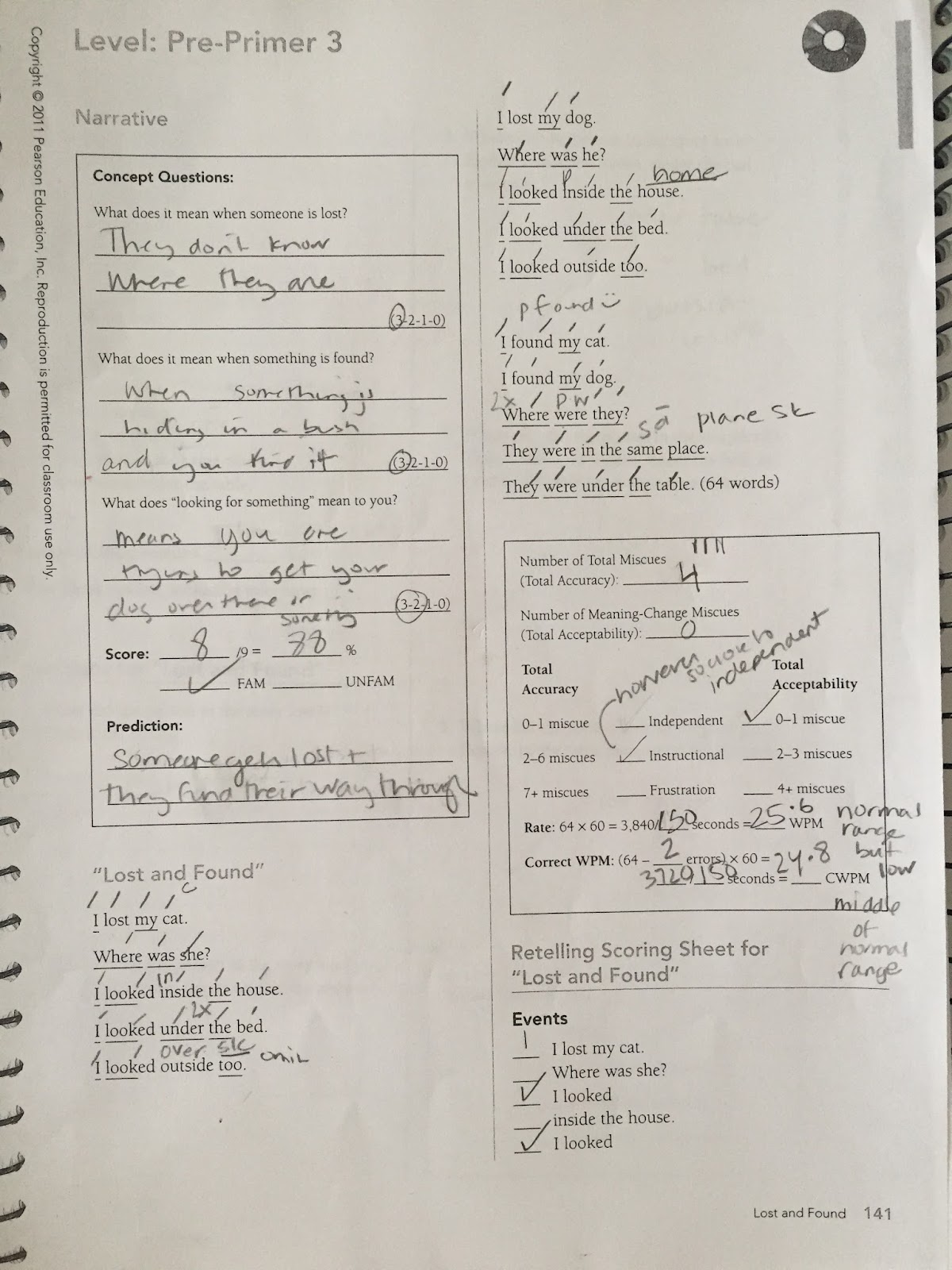
As you can see below, Diego performed well on this passage for word identification. He scored in the instructional range for total accuracy (4 miscues) and scored in the independent range for total acceptability (0 meaning change miscues). The two miscues he did make were to omit the word “too” in the sentence, “I looked outside too”, and to read “home” for house in the sentence, “I looked inside the house”. Neither of these miscues changed meaning (semantics) and both were grammatically correct (syntax). One might wonder why Diego did not stop to self correct these errors, and if that means he is not attending to print closely enough, but Diego did self correct twice in the text saying “over” for outside and self correcting in the sentence “I looked outside too”, and then saying “place” for plane and then self correcting in the sentence “They were in the same place”. In fact when he read “They were in the same plane”, he crinkled up his face and looked at me as if to say, that doesn’t make sense or sound right, then he fixed it. This behavior coupled with the fact that the 4 miscues did not change meaning or compromise syntax, demonstrate that he is attending closely to the text.
Diego’s miscues are another good source of information to examine and consider for making instructional decisions. His miscue of “home” for house shows that he is paying close attention to beginning and ending sounds, but not enough attention to medial sounds. The same is true for the miscue “plane” for place. Diego accurately identified the beginning blend and ending vowel, including the magic e pattern, but substituted /n/ for /c/. Semantic and syntax cues helped him to self correct. In the absence of pictures to support the text, Diego was able to identify new words like the word “found” through graphophonic and syntax cues, and also the meaning he was constructing from the narrative; this was encouraging to see.
Reading Fluency
Diego’s fluency and reading rate were also good at this level, although he was a little slow. I think this is because he is still doing a lot of decoding work which slows him down. His reading rate was 25.6 which falls in the normal range, but on the low end. His correct words per minute score was 24.8 which falls in the middle of the normal range. While I would like to see Diego read this text with more fluency, I do think it is a good level for him to work with.
Reading Comprehension
Diego’s comprehension fell in the independent range, although I found his retelling to be pretty spare; he only gave the big ideas in sequence. He provided 9 out of 21 ideas without prompting. Diego did recall appropriate and important details when asked the comprehension questions and could answer them without looking back. He answered 5 of 5 questions correctly.
2nd Passage Administration (word identification in context, reading fluency, reading comprehension)
I went ahead and administered a Primer level passage, Fox and Mouse, to see how Diego would do on this level. This passage was significantly more challenging for him, even with pictures to assist. As you can see below he fell into the frustration level for word identification and fluency, and instructional level for comprehension, although given the weakness of his retelling I would categorize him more at the frustration level. Diego made 14 miscues which falls in the frustration level for word identification. When reading, “They watered the seeds. Then they waited.”, Diego read, “they wanted the seeds. Then they wetted.” His reading of they wanted the seeds suggests that he is over relying on meaning and syntax without utilizing all parts of the printed word, particularly the middle. This is similar to the pattern demonstrated in Lost and Found. His error of “wetted” for waited, suggests an over reliance on the picture (them watering the seeds) without cross-checking this information with syntax and graphophonics. Diego omitted the entire sentence, “They put the seeds in the ground”, prior to reading, “Then they waited”. It’s possible that this omission also contributed to his subsequent miscues. Diego went on to read laboriously, in a very slow and choppy way. He had to stop to decode very often, and this appeared to deteriorate his understanding of what he was reading. He made errors that did not look right, sound right or make sense, and could not self correct. Some of his errors followed the pattern of a weakness with identifying medial sounds in words (in coordination with other cues) to successfully word solve.
Reading Fluency
Diego read this passage very slowly and laboriously. However, he never once gave up or showed signs of wanting to give up; He was quite persistent. Diego’s word per minute score was 19.2 which falls out of the acceptable range, and his correct words per minute score was 16.9 words per minute which is within the accepted range but low.
Reading Comprehension
Diego’s retelling of Fox and Mouse was very basic and lacked important details and parts that are relevant to demonstrating complete understanding of the story, such as omitting that mouse went into the garden to see if it was growing. He mentioned 6 of 30 ideas without prompting. Perhaps with prompts and look backs he could have done more, but my sense was that he did not have all of the details and parts of the story because too much of his energy had gone into decoding. Diego answered 5 out of 6 comprehension questions correctly which falls in the instructional range for comprehension. It is my opinion that a text like this would be best for guided instruction, where the teacher could preview the book in support of retelling and word solving strategies for words that will likely present challenges to Diego.
Literacy Strengths, Needs & Progress
Strengths
Diego shows many literacy strengths such as:
Known high frequency words
Reading for meaning
Self-monitoring and self-correcting
Using graphophonic, semantic, and syntax cues to identify new words and monitor reading
Persistence
Letter sound knowledge
Pattern recognition
The ability to talk about narratives
Needs
Diego’s performance on these QRI 5 word lists and passages point to some literacy learning needs such as:
Cueing systems integration and cross-checking sources of information
Using medial sounds to correctly identify words
Stopping to self correct when the words don’t look right, sound right, and make sense
Using word parts and breaking words into syllables to identify longer words
Using look backs and studying story elements to support narrative retelling
Progress
Diego is showing many of the strengths and needs of an emergent reader, and will need continued instruction with building his repertoire of high frequency words, phonemic knowledge, word solving strategies, and narrative analysis skills. Continued small group instruction in these areas through the context of guided reading and/or strategy lessons will be most effective, coupled with phonics instruction. The guided reading and strategy lesson structure will provide an authentic and immediate application of the skills and more intensive work with the teacher. Outside phonics instruction will support in context instruction from the teacher during guided reading. If done effectively the two instructional strategies can work together to support one another. Diego would also benefit from additional instruction with studying story elements and mapping narratives through read alouds. A simple story map chart could be made as a result of this and be used as a tool to assist him with retelling.
Technology Infusion Lesson Plan
Lesson Objective: Student will learn to use medial sounds to successfully identify new words while reading. Student will learn to use a story map to prepare for retelling prior to reading and to effectively retell following reading Student will show evidence of using these skills more effectively in his/her work as a result of this targeted instruction. These teaching points were selected as a result of students’ demonstrated needs during QRI 5 assessments. |
Lesson Procedure:
Background A read aloud lesson with the teaching point of using story elements and a story map to retell a narrative will have happened prior to this lesson. A simple narrative map chart will have been created. Students will get a review of this map before the lesson and be reminded that they should use this following the reading to assist with their retelling. The map would include:
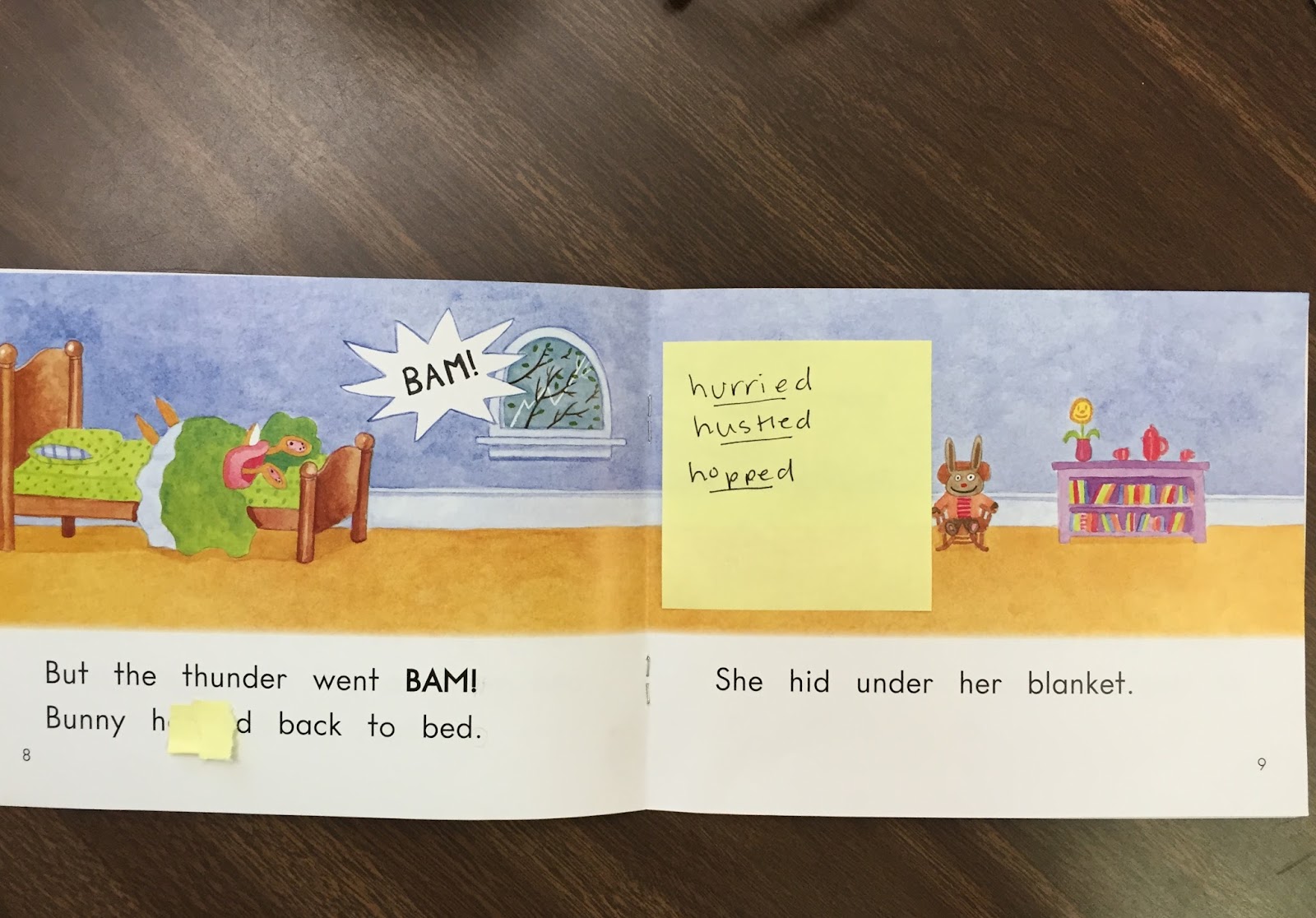
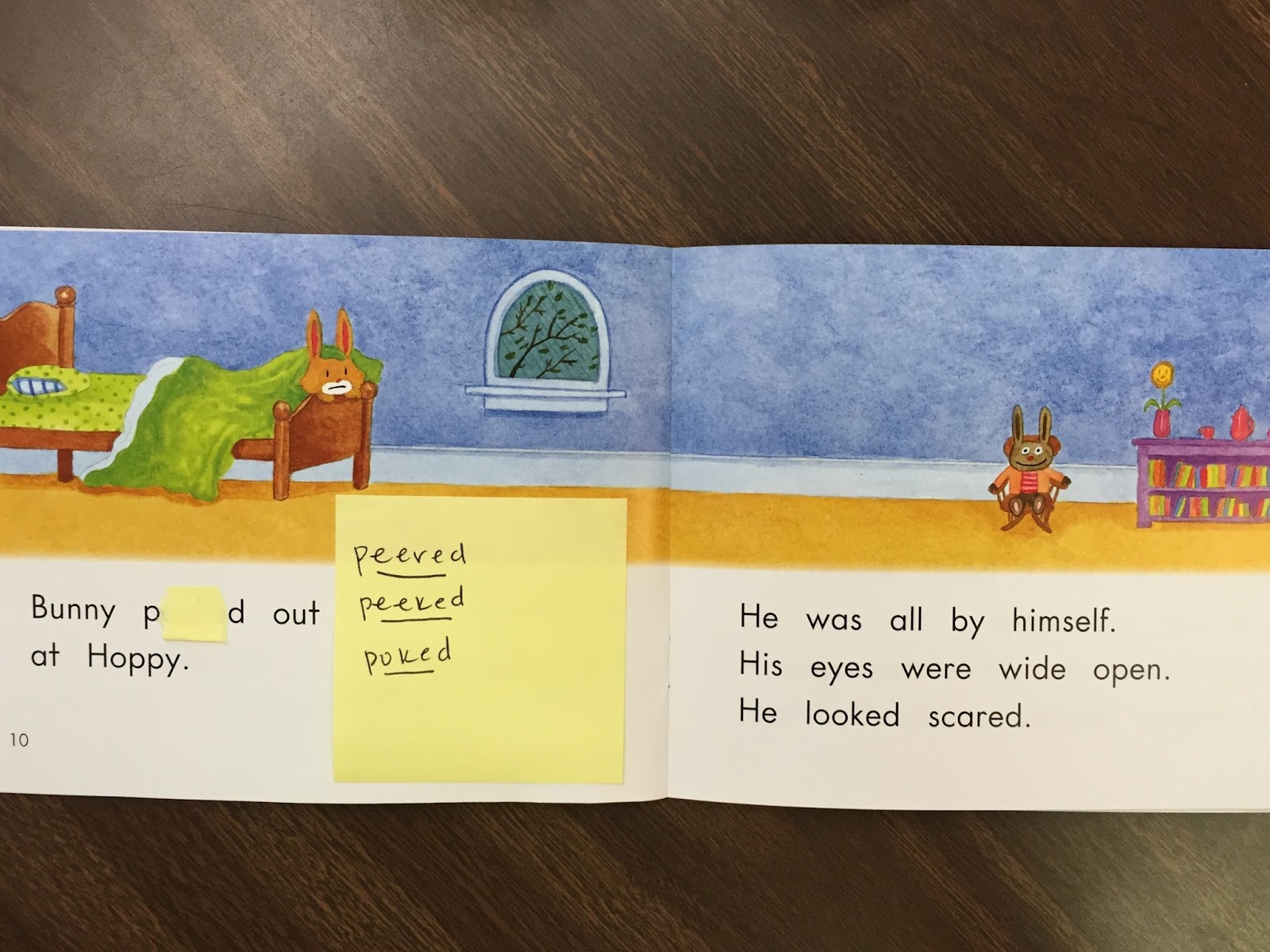
Guided Reading or Strategy Lesson A small group mini lesson about using medial sounds in words, alongside beginning and ending sounds, meaning, and syntax cues will be given during independent reading time in Reading Workshop. This would be given in a group of 4 while the rest of the class reads independently. The teacher will model how to do this, using blocked word parts in a model text, and then provide chances for the students to practice the same strategy in the same text. By pre-blocking words that we know will be tricky for students, and require cue integration, we can hone this specific skill. Blocking the middle of the word specifically will help a student like Diego who often miscues based on mismatching medial sounds. The teacher could purposely pull other children with the same need. As students make thoughtful predictions about what the word might be (using context, syntax, and beginning and ending sounds) these predictions can be compared to the actual medial sounds in the words. Students must cross check the printed word with their ideas to find the word that looks right, sounds right, and makes sense. See examples below: Following this mini lesson, students would either read from just right books in their book bin or from a guided reading text (depending on the structure chosen by the teacher) while the teacher observes and coaches students on using the teaching point just modeled and practiced. The teacher may want to pre-select the text students will read independently to help manage timing, which can be very important. The teacher would also have the students retell at the end of the text, using the story map chart. Assessment and note taking can happen while the children wok. Following the lesson a brief share could take place where the teacher and students share examples of successfully using medial sounds to correctly identify new words while reading, and/or an effective retelling. Following this the teacher could have students work on a crossword on the Montessori Crosswords App for the Ipad where further attention medial sounds would be practiced. |
Common Core Standards Addressed NYS P-12 Common Core Learning Standards for English Language Arts and Literacy Reading Standards for Literature K-5 Grade 1 Key Ideas and Details 2. Retell stories including key details, and demonstrate understanding of their central message or lesson. 3. Describe characters, settings, and major events in a story, using key details. Integration of Knowledge and Ideas 7. Use illustrations and details in a story to describe its characters, setting, or events. Range of Reading and Level of Text Complexity 10. With prompting and support, read prose and poetry of appropriate complexity for grade 1. Reading Standards Foundational Skills K-5 Grade 1 Phonics and Word Recognition 3. Know and apply grade level phonics and word analysis skills in decoding words.
Fluency 4. Read with sufficient accuracy and fluency to support comprehension.
Speaking and Listening Standards K–5, Grade 1 Comprehension and Collaboration: 1. Participate in collaborative conversations with diverse partners about grade 1 topics and texts with peers and adults in small and larger groups. Presentation of Knowledge and Ideas: 4. Describe people, places, things, and events with relevant details, expressing ideas and feelings clearly. 6. Produce complete sentences when appropriate to task and situation.
1. Demonstrate command of the conventions of standard English grammar and usage when writing or speaking. Knowledge and Language: 6. Use words and phrases acquired through conversations, reading and being read to, and responding to texts, including using frequently occurring conjunctions to signal simple relationships. |
Meeting the needs of a variety of learners: This lesson can effectively meet the needs of a variety of learners, including children with special needs and ELLs. Small group instruction is designed to be individualized, pulling children with a similar learning need to address that need directly. Small groups provide repetition and scaffolding with a low student to teacher ratio which means more targeted support. Using a lesson that teaches, models, and actively engages students in practicing the teaching point also assists students with special needs and ELLs. Visual supports such as the story map chart are supportive of students transferring skills and generalizing lessons to their daily work.
Assessment There are many opportunities for assessment during this lesson plan. During the guided reading or strategy lesson the teacher will have time to assess student understanding and skill application during the independent reading time. Note taking or a partial running record/miscue analysis could be taken. The teacher can also assess student narrative retellings in this group as students finish reading their independent text. While not possible during the lesson planned here, the teacher may want to give a post assessment of the skills taught a little later in instruction to see how students are doing with applying the skills and strategies taught with independence. This could inform instruction moving forward.
|
Technology: All students from the small group would be given an Ipad to use the Montessori Crosswords App following the lesson. Here students would revisit the skill of accurately identifying and reading sounds across words, this time in isolation from a text. This supports reading, spelling and writing development and extends one of the teaching points of this lesson. |
Reflection It is a privilege to have the time to administer an assessment like the QRI 5 and to be given this important window into a student’s mind, skills, and learning. In the busy day-to-day work of teachers, it is important to have this opportunity and these assessment tools to dig deep and get a comprehensive picture of a student’s current literacy development. The QRI 5 is also special in that it creates an authentic reading context in which to assess students. The amount of valuable information gathered from this assessment is not to be overlooked. I was clearly able to identify Diego’s instructional and frustration levels for text, and from this point, confidently know what his independent level would be. This is important information to have for matching him to just right books, and planning guided reading to move him to the next level. I was also able to gather detailed information about how Diego approaches and reads narrative passages, and more specifically, how he uses the cueing systems to read new words. His pattern of misreading the middle of words informed my instructional decision to create a lesson plan about this. This takes into consideration also his strengths that were noted such as using meaning, beginning and ending sounds, and syntax to word solve. When administering the QRI 5 I also saw first hand what words Diego knows automatically when reading, and I was given essential information about his reading fluency and comprehension. The patterns noted in his comprehension allowed me to make the instructional decision to also focus on narrative retelling as an instructional goal. The QRI 5 is a one on one assessment that takes a good deal of time to administer which can be tricky for a classroom teacher who may have up to 25 students. However, the amount of invaluable and essential information provided by the tool makes it worth the time. Classroom teachers are faced with the unique challenge of how to create classroom structures and culture that allow them to administer these assessments while the rest of the students work independently. In large part this will depend on the literacy program adopted by the school/teacher and the literacy work time the teacher creates from the very beginning of the school year. In my classroom teaching we used the workshop model for teaching which meant that my students learned how to work with independence and problems solve during work times so I would be free for small group instruction. This meant that three times a year I could put small groups on hold and administer running records like the QRI 5 with all of my students. I do believe that assessments like the QRI 5 are essential for effective teaching, including individualized instruction and intervention. I am pleased to have learned how to use the QRI 5 and to have another assessment tool in my teaching toolbox. |

 Please wait...